Fire Damage Restoration in Beaverton, OR — Soot Cleanup, Smoke Odor Elimination & Structural Recovery
FSRT-Certified Fire & Smoke Response for Beaverton, Washington County & the Portland Metro — Since 2015
After fire damage strikes your Beaverton home or business, fire damage restoration must begin immediately — every hour soot and smoke residue go untreated, the corrosive byproducts etch surfaces deeper, drive smoke odors further into framing and insulation, and in Pacific Northwest conditions, begin combining with moisture to create the acidic "smoke-rot" unique to high-humidity environments. Tualatin Beaver Restoration provides complete fire damage restoration in Beaverton, Oregon with IICRC FSRT-certified technicians, commercial large-loss capability through our CDS certification, and single-company accountability from board-up through final reconstruction. If firefighting water also caused damage, our team provides emergency water damage restoration as part of our integrated response.
- Local Beaverton, OR fire damage restoration company since 2015
- IICRC FSRT (Fire and Smoke Damage Restoration Technician) certified on staff
- CDS certification for commercial large-loss fire damage response
- 24/7 emergency response for board-up, stabilization & immediate soot mitigation
- Serving Aloha, Hillsboro, Tigard, Tualatin, Lake Oswego, and all of Washington County
No Extra Charge to Call — Free Assessment
Request Emergency Fire Damage Restoration
Fill out the form and we'll contact you immediately!
Award-Winning Fire Damage Restoration in Beaverton, Oregon
Washington County's IICRC FSRT-certified residential and commercial fire restoration team
Tualatin Beaver Restoration is a fully certified fire damage restoration company with 10 years of experience responding to fire and smoke damage throughout Beaverton and Washington County's Tualatin Valley. Led by Owner Bill Olson, our team holds the IICRC Fire and Smoke Restoration Technician (FSRT) certification along with the Commercial Drying Specialist (CDS) credential — enabling us to handle both residential fires and the large-loss commercial fire events that arise in Beaverton's Nike HQ corridor, the Five Oaks and Tanasbourne districts, and Washington County's retail and industrial properties. When fire suppression efforts cause secondary moisture issues, our team also provides water damage repair to ensure complete structural reconstruction.
FSRT Certified
Fire and Smoke Restoration Technician — IICRC Certified
CDS Certified
Commercial Drying Specialist — IICRC Certified (commercial large-loss fire)
HST Certified
Health and Safety Technician — IICRC Certified
WRT Certified
Water Damage Restoration Technician — IICRC Certified (firefighting water)
AMRT Certified
Applied Microbial Remediation Technician — IICRC Certified (post-fire mold)
30 Professionals
30 skilled restoration professionals, 5 fully equipped service vehicles
10 Years Serving Beaverton
10 years serving Beaverton, OR and Washington County
24/7 Emergency
24/7 emergency availability — board-up and stabilization same day
Fire Damage Restoration for Properties Near Beaverton's Neighborhoods, Parks & Commercial Districts
From Cedar Hills and West Slope residential homes to Nike HQ, Progress Ridge, and the Tanasbourne commercial corridor
Tualatin Beaver Restoration responds to fire and smoke damage emergencies throughout Beaverton, Oregon — from older Cedar Hills and Raleigh Hills homes with original Pacific Northwest timber construction where soot penetrates porous wood surfaces more aggressively than in newer builds, to newer Sexton Mountain and Murrayhill developments, to commercial properties near Nike World Headquarters, Progress Ridge TownSquare, Patricia Reser Center for the Arts, and the Five Oaks and Tanasbourne commercial and industrial corridors. Oregon's wildfire seasons also bring exterior smoke intrusion risk to Beaverton properties, particularly homes near Tualatin Hills Nature Park and Cooper Mountain Nature Park as regional air quality events penetrate HVAC systems and porous surfaces without a single structural fire occurring. If post-fire moisture has created mold growth in your property, we also provide mold remediation as part of our complete restoration approach.
Beaverton Neighborhoods
Central Beaverton, Denney Whitford / Raleigh West, Five Oaks / Triple Creek, Greenway, Highland, Neighbors Southwest, Sexton Mountain, South Beaverton, Vose, West Beaverton, West Slope
Parks & Wildfire Smoke Risk Areas
Tualatin Hills Nature Park, Cooper Mountain Nature Park, Fanno Creek Trail, Hyland Forest Park
Commercial & Institutional Landmarks
Nike World Headquarters, Patricia Reser Center for the Arts, Progress Ridge TownSquare, Cedar Hills Crossing, The Round at Beaverton Central
Portland Metro Access
Forest Park, Washington Park, OMSI, Oregon Zoo — within the broader Portland metro fire restoration service area
Nearby Service Areas
Beaverton's FSRT-Certified Fire Damage Team — Residential and Commercial Large-Loss Capability
Correct soot chemistry, molecular odor elimination, and commercial scope under one certified company
We provide the full scope of fire damage restoration — from emergency board-up and immediate soot mitigation through molecular smoke odor elimination and complete structural reconstruction. Our FSRT certification covers the material-specific cleaning chemistry and deodorization protocols that prevent the permanent surface damage caused by incorrect soot treatment. Our CDS certification extends that capability to commercial large-loss fire events where drying equipment scale and coordination go beyond what residential-only teams can execute. Combined, these credentials make Tualatin Beaver Restoration the most comprehensively certified fire damage restoration company serving the Beaverton market. When structural reconstruction is needed after firefighting efforts, our team delivers water damage repair alongside fire restoration for a seamless recovery.
What Happens to Your Beaverton Home or Business After a Fire
Why Pacific Northwest humidity makes fire damage more urgent here than in drier climates
Fire damage in Beaverton's Pacific Northwest environment is more time-sensitive than in drier regions. Beaverton's naturally high ambient humidity causes soot and smoke residue to combine with moisture, creating what Portland-area restoration professionals call "smoke-rot" — an acidic reaction that accelerates permanent surface damage beyond what dry soot alone would cause. The combination of corrosive soot and Pacific Northwest humidity means that every hour without professional soot mitigation costs more surface area and more salvageable material.
Rapid Surface Damage
Soot begins etching glass and tarnishing metals within hours — and Beaverton's humidity accelerates the acidic reaction
Pacific NW Timber Vulnerability
Pacific Northwest timber construction is particularly porous, allowing smoke to penetrate more deeply into structural wood than in concrete-heavy construction
Molecular Smoke Penetration
Smoke odor penetrates at the molecular level into walls, insulation, ductwork, and framing — surface cleaning cannot eliminate it
Secondary Water Damage
Firefighting water creates secondary water damage that must be addressed alongside smoke and soot cleanup to prevent Oregon's rapid mold development — our team provides emergency water damage restoration as part of fire response
Kitchen Fire Residue
Kitchen fires, among the most common type in Beaverton neighborhoods, release oily smoke that coats surfaces with a sticky protein residue that standard cleaning products smear deeper rather than remove
Who Our Fire Damage Restoration Service Is For
Homeowners, landlords, and commercial property managers throughout Washington County
We provide fire damage restoration for single-family homes, rental properties, multi-unit residential buildings, commercial properties, and commercial large-loss events throughout Beaverton and all of Washington County. If fire suppression water reached below-grade spaces in your property, our team also delivers basement flood cleanup as part of our comprehensive fire damage response.
Homeowners in Cedar Hills, West Slope, and Sexton Mountain dealing with a kitchen fire, electrical fire, or fireplace-related fire
Rental property owners needing certified documentation of scope and restoration for insurance purposes
Commercial property owners near the Nike HQ corridor, Tanasbourne, and Progress Ridge needing large-loss fire restoration
Beaverton homeowners experiencing Oregon wildfire season smoke intrusion through HVAC systems and exterior penetrations
Property owners dealing with lingering smoke odor from a fire event that was incompletely cleaned by a previous contractor
Anyone who needs board-up and structural stabilization immediately after a fire to protect against Oregon's frequent rain exposure
Fire Damage Risk Factors in Beaverton & Washington County
How Pacific Northwest conditions create specific fire damage restoration challenges
Beaverton's fire damage profile includes both common residential causes and region-specific factors. Older Cedar Hills and Raleigh Hills homes with original Pacific Northwest timber framing and lath-and-plaster construction present different soot penetration challenges than modern drywall builds. Oregon's increasing wildfire seasons bring exterior smoke intrusion events to Beaverton even without a structural fire — contaminating HVAC systems, penetrating porous surfaces, and creating odor and air quality problems that require the same molecular deodorization protocols used after a structural fire. And because Beaverton's high humidity combines with soot residue to accelerate surface damage, fire restoration here demands faster response than in drier climates.
Timber-Frame Vulnerability
Cedar Hills and Raleigh Hills older timber-frame homes are more vulnerable to deep soot penetration than newer builds — Pacific Northwest wood is particularly porous
Humidity-Accelerated "Smoke-Rot"
Beaverton's high ambient humidity accelerates "smoke-rot" — the acidic combination of soot and moisture that causes faster permanent surface damage than dry soot alone
Oregon Wildfire Smoke Intrusion
Oregon's wildfire seasons create exterior smoke intrusion events in Beaverton that contaminate HVAC systems and require professional molecular deodorization without any structural fire
Hillside Smoke Exposure
Sexton Mountain hillside homes may be exposed to wind-driven smoke events during Oregon's dry summer months when regional wildfire risk is elevated
Kitchen Fires, Electrical Fires, Wildfire Smoke & Commercial Events: Fire Damage Types in Beaverton, OR
Understanding the type and scope of fire damage determines the right restoration approach
For fire damage restoration in Beaverton, the type of fire, what materials burned, and how far smoke has traveled determine the cleaning chemistry, deodorization method, and reconstruction scope. Whether firefighting water also caused structural damage requiring water damage repair or secondary moisture led to conditions needing mold remediation, our team addresses every dimension of fire damage under one certified company.
| Fire Damage Type | What Happened | Restoration Approach |
|---|---|---|
| Structural Fire (Full Room+) | Flames damaged structure, contents, framing | Board-up, demolition, structural cleaning, reconstruction |
| Kitchen / Contained Fire | Limited fire area, oily smoke traveled further | Protein residue cleaning, FSRT protocol, molecular deodorization |
| Electrical / Smoldering Fire | Synthetic soot, oily residue, intense odor | Wet cleaning for synthetic soot, hydroxyl treatment |
| Oregon Wildfire Smoke Intrusion | Exterior smoke entered via HVAC and penetrations | HVAC cleaning, surface deodorization, air quality treatment |
| Commercial Large-Loss Fire | Multi-room or multi-floor commercial fire event | CDS-certified large-loss restoration and reconstruction |
| Firefighting Water Damage | Secondary water damage from suppression efforts | WRT-certified extraction, structural drying alongside fire cleanup |
Key Fire Damage Insights for Beaverton Properties
- Kitchen fires are among the most common in Beaverton neighborhoods — the oily protein residue they produce is nearly invisible but requires enzyme-specific cleaning chemistry that consumer products cannot replicate
- Oregon wildfire smoke intrusion: an increasingly common Beaverton event requiring the same molecular deodorization as a structural fire, particularly for HVAC systems that distributed smoke throughout the home
- Pacific Northwest timber construction makes soot penetration deeper and more difficult to clean than in concrete or newer synthetic-material builds
- Commercial large-loss events in Beaverton's Tanasbourne and Five Oaks corridors require CDS-certified drying coordination alongside FSRT fire restoration scope
Our 6-Step Fire Damage Restoration Process in Beaverton, OR
From emergency stabilization to completed, deodorized restoration
Emergency Board-Up & Stabilization
We secure fire-damaged properties with board-up and roof tarping services to protect against Oregon's frequent rain, preventing secondary water damage and further structural exposure while restoration begins.
Damage Scope Assessment & Documentation
Our FSRT-certified technicians perform a complete assessment — mapping all areas affected by flame, soot, smoke, and firefighting water — with photos, moisture readings, and written scope reports for insurance documentation.
Content Protection & Pack-Out
We document, protect, and remove salvageable contents for off-site cleaning and secure storage, separating restorable items from those that cannot be recovered and providing a complete inventory.
Structural Soot Cleaning
Using material-specific cleaning chemistry appropriate for each surface type — Pacific Northwest timber, plaster, drywall, fixtures — we remove soot and char residue using the correct FSRT protocol for dry soot, wet soot, or protein residue.
Molecular Smoke Odor Elimination
We eliminate smoke odor at the molecular level using thermal fogging, ozone treatment, or hydroxyl generation — the right method for each property's fire type and occupant situation — rather than masking odor with surface deodorizers.
Reconstruction & Final Documentation
We coordinate or execute structural reconstruction from demolition through drywall, flooring, painting, and final finishes, and deliver complete insurance documentation from scope through restoration completion.
What's Included in Our Beaverton Fire Damage Restoration Service
From board-up and stabilization through final structural restoration
Emergency board-up and roof tarping for structural security against Oregon's rain
Complete scope documentation for insurance from day one
Content documentation, pack-out, and off-site storage
Material-specific structural soot and char cleaning using FSRT-certified chemistry
Molecular-level smoke odor elimination with thermal fogging, ozone, or hydroxyl treatment
Secondary water damage extraction and structural drying
Reconstruction coordination or execution: demolition, drywall, flooring, finishing
Complete final insurance documentation package
Beaverton's Trusted Fire Damage Restoration Team
FSRT and CDS certification, residential and commercial scope, Pacific Northwest expertise
When you compare fire damage restoration companies in Beaverton, Tualatin Beaver Restoration stands out for the combination of FSRT-certified fire restoration expertise and CDS commercial large-loss capability — enabling us to handle both residential kitchen fires and complex commercial fire events in Beaverton's business districts.
IICRC FSRT Certified
Material-specific fire and smoke cleaning, deodorization, and documentation
CDS Certified
Commercial large-loss fire events beyond residential restoration scale
10 Years in Beaverton
Serving Beaverton, OR and Washington County since 2015
30 Professionals
30 in-house professionals, 5 fully equipped service vehicles
Complete Scope
Board-up through reconstruction — no separate contractor handoff
What Certified Fire Damage Restoration Achieves in Beaverton, OR
From soot-covered surfaces and lingering smoke odor to a restored, habitable property
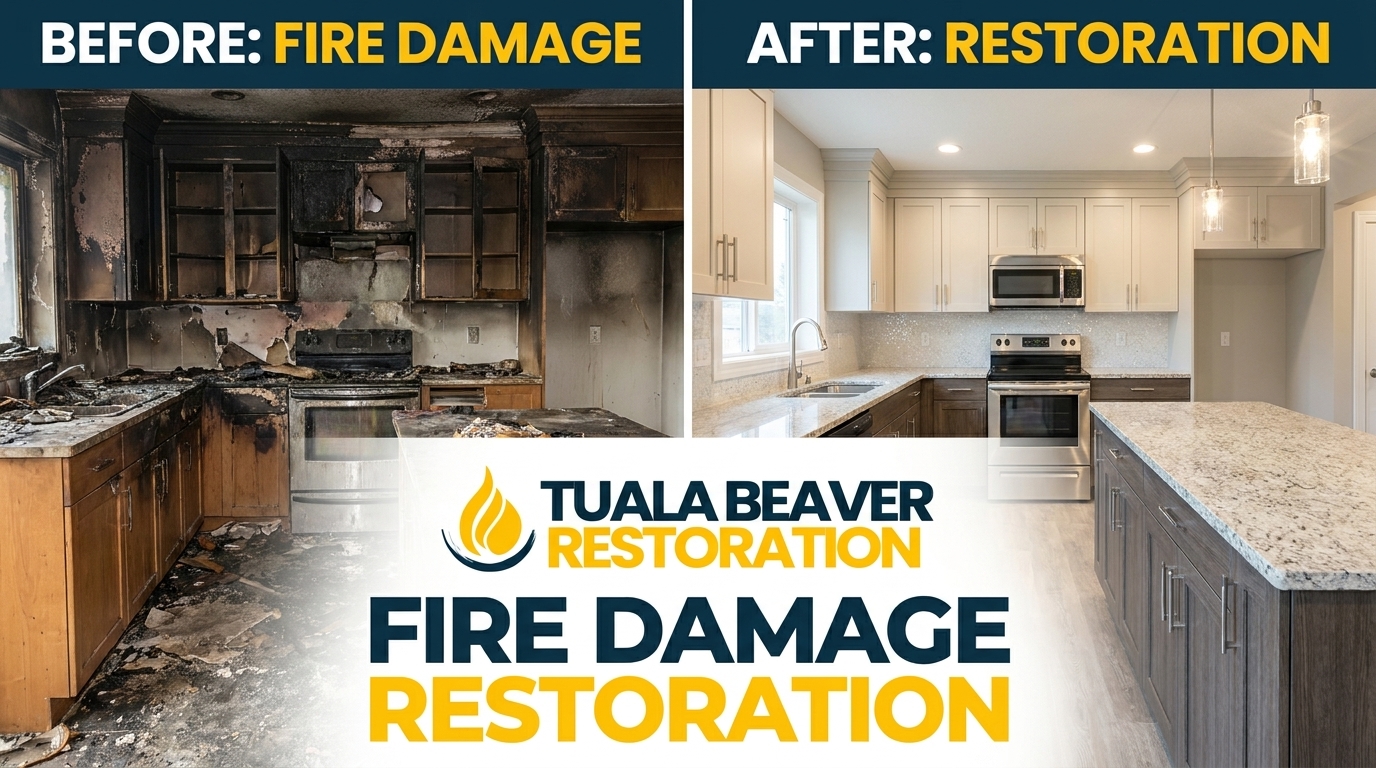
A Cedar Hills timber-frame home's kitchen fire addressed with FSRT-certified protein residue cleaning chemistry, saving original wood surfaces that consumer cleaning attempts had smeared deeper
A Sexton Mountain residence's contained electrical fire completely deodorized using hydroxyl generation, eliminating synthetic soot odor that surface cleaners had failed to address
A Tanasbourne commercial property restored after a multi-room fire using CDS-certified large-loss protocol alongside FSRT fire restoration scope
A Raleigh Hills home's persistent smoke odor from Oregon wildfire season intrusion eliminated through molecular thermal fogging after the HVAC system was professionally cleaned
Fire Damage Restoration Equipment and Methods in Beaverton, OR
FSRT-certified chemistry, Pacific Northwest-appropriate techniques, and commercial-scale equipment
FSRT-Certified Cleaners
Alkaline, enzyme, solvent, and dry-cleaning sponges matched to each surface and soot type
Thermal Fogging
Molecular penetration of smoke odor in porous Pacific Northwest timber construction
Ozone Generation
Severe odor treatment for unoccupied properties
Hydroxyl Generators
Odor treatment for occupied or occupied-adjacent spaces
HEPA Air Scrubbers
Fine particulate filtration during active cleanup
Water Extraction & Drying
Equipment for secondary firefighting water damage — integrated emergency water damage restoration
Commercial-Scale Equipment
CDS-scope deployment for commercial fire events in Beaverton's business corridors
Why DIY Fire Cleanup Makes Damage Worse in Beaverton, OR's Pacific Northwest Climate
The most common fire damage mistake in Beaverton costs more to fix than the original event
In Beaverton's high-humidity environment, the consequences of DIY soot cleanup are more severe than in dry climates. Wiping soot with the wrong cleaning product causes it to smear and penetrate deeper — and in Pacific Northwest conditions, moisture in the air combines with the residue to accelerate the acidic reaction that permanently etches glass, stains porous wood, and discolors plaster long before professional help arrives.
| Approach | What It Achieves | What It Risks |
|---|---|---|
| DIY Soot Wiping | Visible surface contact | Condensing soot deeper; in Beaverton's humidity, triggering "smoke-rot" on Pacific NW timber |
| Consumer Deodorizers | Temporary odor masking | Odor returning within days; no molecular elimination |
| FSRT-Certified Restoration (Tualatin Beaver) | Complete soot removal, molecular odor elimination | Nothing — certified restoration is complete to IICRC standard |
The DIY Risk in Beaverton Specifically
- Pacific Northwest timber in older Cedar Hills and Raleigh Hills homes is more porous than synthetic modern materials — incorrect soot cleaning penetrates faster and more permanently
- Beaverton's ambient humidity combines with soot to accelerate surface damage beyond what the same soot would cause in dry climates — the urgency to call professionals is higher here
- Oregon wildfire smoke intrusion creates widespread HVAC contamination that consumer air purifiers cannot address — ductwork cleaning is required to prevent ongoing recontamination
- Fire extinguisher powder used in commercial settings requires specific chemistry — water applied incorrectly can reactivate its corrosive properties
Estimate Your Fire Damage Restoration Cost in Beaverton, OR
From a contained kitchen fire to a commercial large-loss event
We provide a free on-site scope assessment with transparent, documented pricing before any work begins.
Main Cost Drivers
- Extent: contained single-room vs. multi-room or structural fire
- Materials involved: Pacific Northwest timber and plaster vs. modern drywall construction
- Smoke travel distance beyond the fire area
- Secondary water damage from firefighting
- Residential vs. commercial large-loss scope
| Restoration Scope | Typical Range |
|---|---|
| Oregon wildfire smoke intrusion (no structural fire) | ~$2,500 – $8,000 |
| Contained kitchen or small-room fire | ~$3,000 – $10,000 |
| Single-room structural fire with cleaning and odor | ~$8,000 – $25,000 |
| Multi-room fire with partial reconstruction | ~$15,000 – $50,000+ |
| Commercial large-loss fire (CDS scope) | Custom assessment |
Who Needs Professional Fire Damage Restoration in Beaverton, OR?
When a fire event requires FSRT-certified professional response
Any fire that produced visible soot, smoke residue, or persistent odor in your home or business
Any event where firefighting water created secondary moisture damage alongside smoke — requiring integrated emergency water damage restoration
A persistent smoke smell that hasn't resolved despite DIY cleaning attempts
Oregon wildfire smoke intrusion that has penetrated your HVAC system and porous surfaces
A commercial property near Nike HQ, Tanasbourne, or Progress Ridge needing large-loss certification
Any fire event where your insurance company requires certified documentation of scope and remediation
Benefits of Certified Fire Damage Restoration in Beaverton, OR
FSRT certification and Pacific Northwest expertise determine whether your property is genuinely restored
Professional, FSRT-certified fire damage restoration in Beaverton's Pacific Northwest environment determines whether soot causes permanent surface damage before being addressed, whether smoke odor is genuinely eliminated at the molecular level, and whether firefighting water creates secondary mold issues in Oregon's humid conditions. For properties where post-fire moisture has led to microbial growth, our mold remediation service ensures complete biological recovery alongside fire restoration.
Correct Soot Chemistry
FSRT-certified soot cleaning chemistry prevents the permanent surface damage that wrong-product DIY attempts cause — more important in Beaverton's humidity than in dry climates
Molecular Odor Elimination
The property is genuinely deodorized, not masked — a property that still smells like smoke is an incomplete restoration
Commercial Large-Loss Capability
CDS certification enables commercial large-loss fire response that most Beaverton restoration companies cannot execute at full scope
Insurance Documentation
Oregon homeowner's insurance covers fire damage restoration — FSRT certification ensures the documentation supports your claim
No Contractor Handoff
Complete reconstruction under one certified company means no handoff gaps between restoration and repair
Safety Alert: Fire-Damaged Structures Are Not Safe to Re-Enter Without Professional Assessment
Visible fire damage represents the minimum scope — hidden risks require professional evaluation
Fire-damaged properties in Beaverton present specific hidden hazards: structural members that appear intact but have been heat-compromised, electrical systems exposed to fire and firefighting water, airborne soot particles that pose respiratory risks, and for older Cedar Hills and Raleigh Hills homes, the possibility of asbestos-containing materials disturbed by fire damage.
Fire Damage Restoration FAQs for Beaverton, OR Property Owners
Answers about cost, soot, smoke odor, and Oregon insurance coverage
An Oregon wildfire smoke intrusion or contained small fire typically runs $2,500–$10,000. Single-room structural fire restoration with cleaning and odor work runs $8,000–$25,000. Multi-room fires with reconstruction can reach $15,000–$50,000 or more. Commercial large-loss events are scoped individually. Call Tualatin Beaver Restoration at (971) 518-4200 for a free assessment.
Beaverton's Pacific Northwest humidity causes soot residue to combine with ambient moisture, creating an acidic reaction that permanently damages surfaces faster than in dry climates. Fire restoration professionals call this "smoke-rot" — and it makes the same soot more destructive here than in Portland's drier eastern suburbs.
Yes, standard Oregon homeowner's insurance policies cover fire damage restoration including soot cleanup, smoke odor treatment, content restoration, and structural reconstruction. Oregon insurance carriers are familiar with fire claims due to the state's increasing wildfire seasons, and we provide complete FSRT-certified documentation to support your claim.
Yes. Wildfire smoke that has entered through HVAC systems and penetrated porous surfaces requires the same molecular deodorization approach used after a structural fire — thermal fogging or hydroxyl generation combined with professional HVAC duct cleaning. Surface cleaning alone or consumer air purifiers cannot eliminate it. Contact our team for a free assessment.
Our Beaverton Fire Damage Restoration Guarantee
FSRT-certified restoration, molecular odor elimination, and a property genuinely returned to pre-loss condition
Tualatin Beaver Restoration stands behind every fire damage restoration project in Beaverton, OR with IICRC FSRT-certified technique and our own satisfaction guarantee. When we complete a fire damage restoration project, smoke odor is eliminated at the molecular level — not masked — and every affected surface has been cleaned with correct material-specific chemistry appropriate for Pacific Northwest construction.
Since 2015, property owners across Beaverton — from older Cedar Hills timber-frame homes to commercial properties near Nike World Headquarters and the Tanasbourne corridor — have trusted Tualatin Beaver Restoration for professional fire damage restoration in Beaverton, OR that genuinely returns their properties to pre-loss condition.
Fire Damage Restoration Beaverton OR — Service Area Coverage
Our fire damage restoration team responds throughout the Tualatin Valley — from Tualatin to Portland, Hillsboro, Tigard, and all of Washington County.
Cities We Serve Near Beaverton OR
Get Emergency Fire Damage Restoration in Beaverton OR Now
Need an FSRT-certified fire damage restoration company in Beaverton OR? Our 30 skilled professionals are standing by 24/7. If you can't find the information you need about our restoration services in Beaverton OR, please reach out and we'll walk you through your options.
Contact Tuala Beaver Restoration
(971) 518-4200
tualabeaverrestoration@gmail.com
4715 SW Murray Blvd
Beaverton, OR 97005
24/7 Emergency Fire Damage Service Available